How Optimal U Avoided the Wall That Slows Other Clinics Down
began
per patient
capacity
Overview
Optimal U is a physician-led mobile health clinic operating across the Greater Toronto Area. Rather than asking clients to navigate a conventional healthcare setting, Optimal U brings a complete, medically rigorous wellness assessment directly to them at corporate offices, private homes, gyms, and partner venues. Each assessment generates a comprehensive data set across dozens of biomarkers, VO² and fitness evaluations, DEXA body composition and bone density imaging, DNA-based Nutrigenomix testing, physician examination findings, and detailed health histories. The output is a personalized Lifestyle Medicine action plan, developed in accordance with ACLM standards, and delivered by the physician who reviewed every piece of it.
Optimal U came to PulseAI not with a broken system to fix, but with a vision and a clear-eyed question: how do we build the operational foundation right, before growth makes it harder? PulseAI became their IT partner from the first day, embedded before the first patient, and scaling alongside the clinic ever since.
The Challenge — Anticipating the Bottleneck Before It Arrived
Optimal U was designed from the outset to deliver thorough, data-rich assessments. That thoroughness is precisely what clients pay for and what makes the clinical recommendations meaningful. But it also means that every patient generates a substantial volume of data labs across dozens of biomarkers, imaging results, genomic outputs, fitness scores, and health histories. All this data then needs to be synthesized before a physician can form a clinical picture and begin the consultation.
Optimal U's founders recognized a pattern that plays out repeatedly across growing preventative health practices: in the early days, physicians can manage this synthesis manually. It takes time, but the volume is low enough to absorb it. As patient volume grows, however, that preparation time scales with it. Physicians, the clinic's highest-cost resource and its core, find themselves spending progressively more of their working day on data synthesis rather than patient care. The ceiling on how many patients a physician can meaningfully see is set not by clinical capacity, but by administrative bottleneck. Clinics that wait until they feel this pressure before addressing it end up retrofitting automation into practices already built around manual processes; an expensive, disruptive undertaking at exactly the moment when demand is highest.
Optimal U chose a different path. Before they saw their first patient, they asked PulseAI to build the infrastructure that would ensure this bottleneck never materialized.
The Solution — AI Report Generation, Built In from the Start
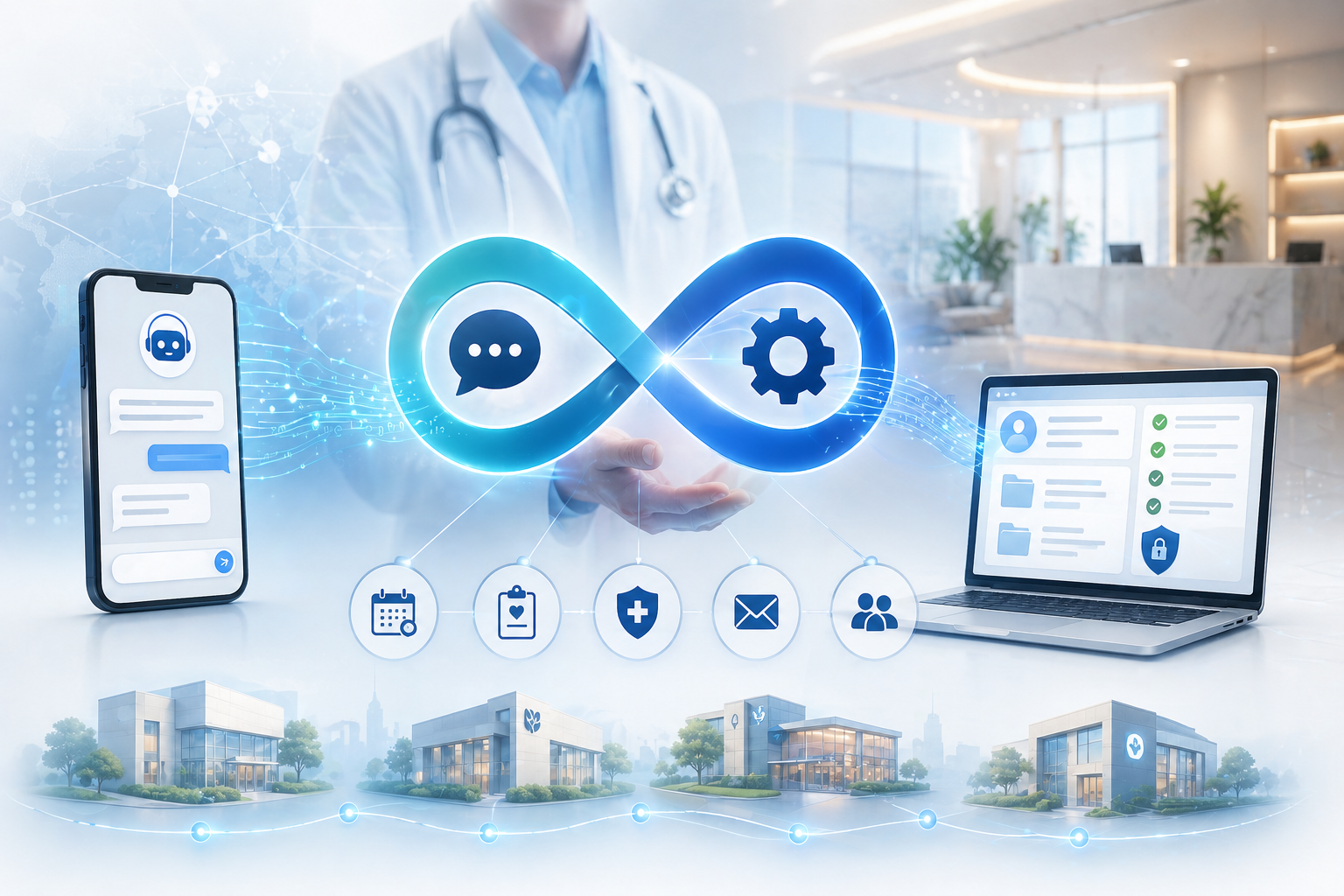
PulseAI designed and built a custom AI report generation tool as a foundational component of Optimal U's operational model, a core part of how the clinic functions from day one. The tool integrates directly with Optimal U's data pipeline. As each patient assessment is completed, the full data set flows into the system automatically: lab results across all biomarkers, imaging outputs, fitness and VO² scores, genomic testing results, physician exam findings, and health history.
The AI processes all of this into a structured, physician-ready executive summary. Key risk indicators are surfaced first. Biomarkers are contextualized against appropriate reference ranges and flagged where values warrant clinical attention. Fitness and body composition findings are presented with relevant benchmarks. Lifestyle factors are organized alongside their clinical implications. Nothing is omitted, and nothing requires the physician to hunt for it.
The tool does not attempt to replace clinical judgment. Instead, it eliminates the clerical work that precedes it. By the time a physician opens a patient file, the data has already been synthesized, cross-referenced, and organized in the way a clinician thinks. All data is presented in a way that allows transparency for the physician to easily validate information, and uses their established parameters to refine recommendations. What they bring to the review from diagnostic reasoning, clinical intuition, and the ability to hold a patient's full picture in mind is exactly what they spend their time on. Pre-consultation preparation, which might consume several hours at a conventionally structured practice, takes approximately five minutes at Optimal U. Every patient, every assessment, from the very first clinic day to the present.
“AI is not going to replace doctors — it’s going to make them superhuman.”
— Dr. Daniel Kraft, Physician & Futurist
Outcomes & Impact
Because the infrastructure was right from the beginning, the benefits at Optimal U have compounded rather than accumulated. Each patient seen, each clinic day run, each new location added has been supported by a foundation that was built to handle it, and continues to grow from it.
Physician capacity was never the bottleneck. From the first clinic day, physicians entered consultations already informed, with data synthesized and findings organized. The pre-consultation hours that constrain throughput at comparable practices simply did not exist at Optimal U. As patient volume has grown, physician capacity has grown with it with internal benchmarks indicating up to a ten-fold improvement in assessment capacity when the preparation burden is removed at this level.
Growth has never required rebuilding processes. Clinics that build manual workflows early and automate later face a disruptive transition where staff is accustomed to doing things one way, data in formats not built for automation, and the risk of disrupting clinical operations mid-flight. Optimal U has never faced that transition, and won't have to. Their infrastructure grew alongside the clinic, not behind it. Each expansion with more clinic days, more venues, more patients served across the country has been absorbed without operational friction, because the system was always designed for exactly this kind of growth.
The cost advantage is permanent, not temporary. Physician time is the clinic's highest-cost resource. Every hour recovered from administrative data synthesis and redirected toward patient consultation carries full financial and clinical value. Optimal U eliminated that cost before it was ever incurred and continues to realize that saving on every single assessment, at every level of volume, with no expiry date.
Most importantly, the physicians at Optimal U have always been able to do what they built the clinic to do. The work they show up to each clinic day with preventative, data-driven, deeply personalized medicine, delivered directly in a patient-first system that prioritizes Lifestyle and longevity medicine. That clarity of purpose, sustained from the very first patient, is the truest measure of what building with the right partner from day one makes possible.